How to Fly a Patang: A Beginner's Guide for the First Basant Back
Flying a patang is a two-person launch followed by one repeated skill: the pinch-and-release. A partner holds the kite downwind and lofts it on your signal; you take up tension, then climb by alternating short, firm tugs (which pitch the kite's nose up) with controlled line release (which lets it rise). Height comes from rhythm, not strength — and control comes from keeping just enough tension that the kite always answers your hand.
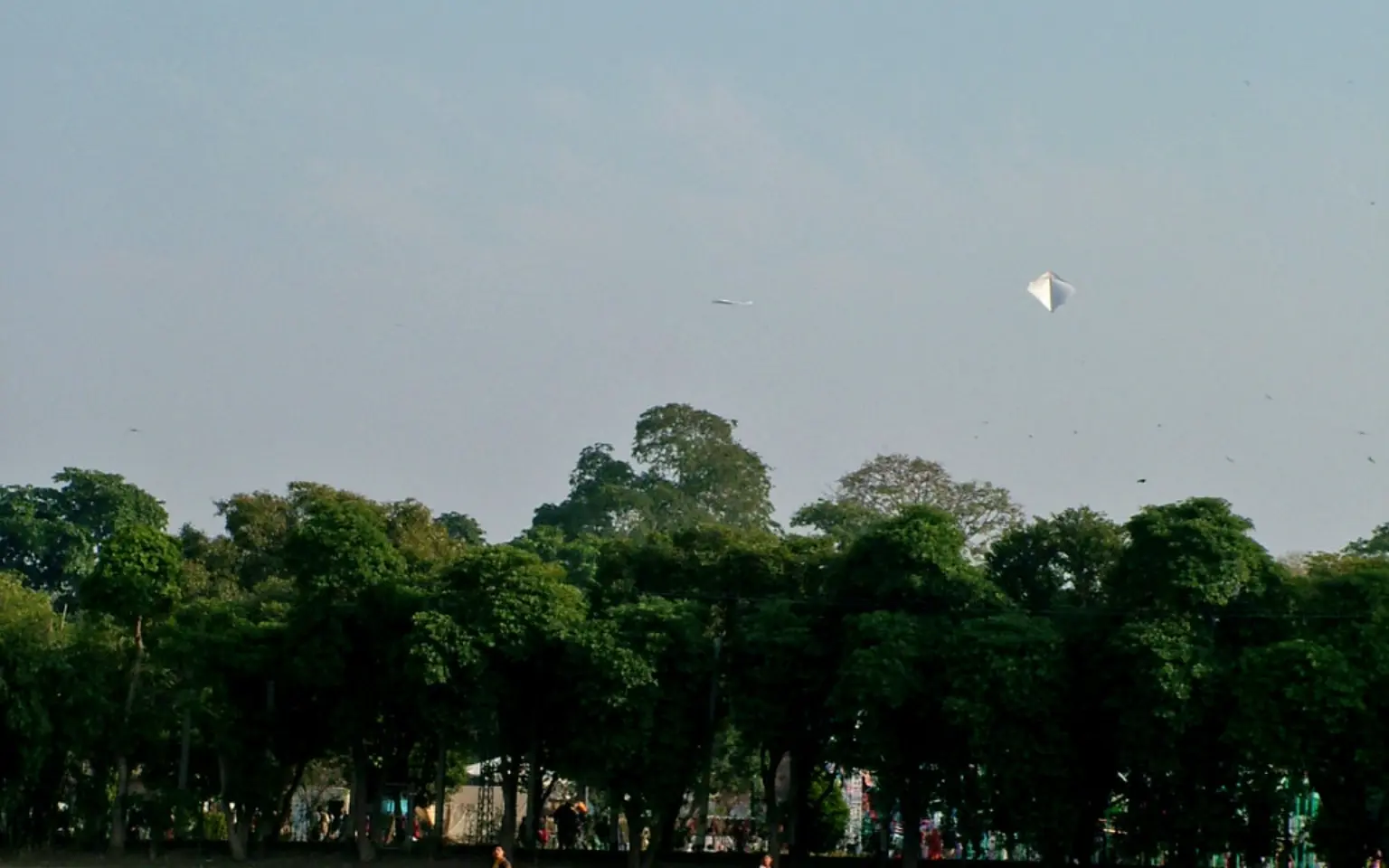
- Launch with a partner downwind — solo ground launches are for calm-day experts
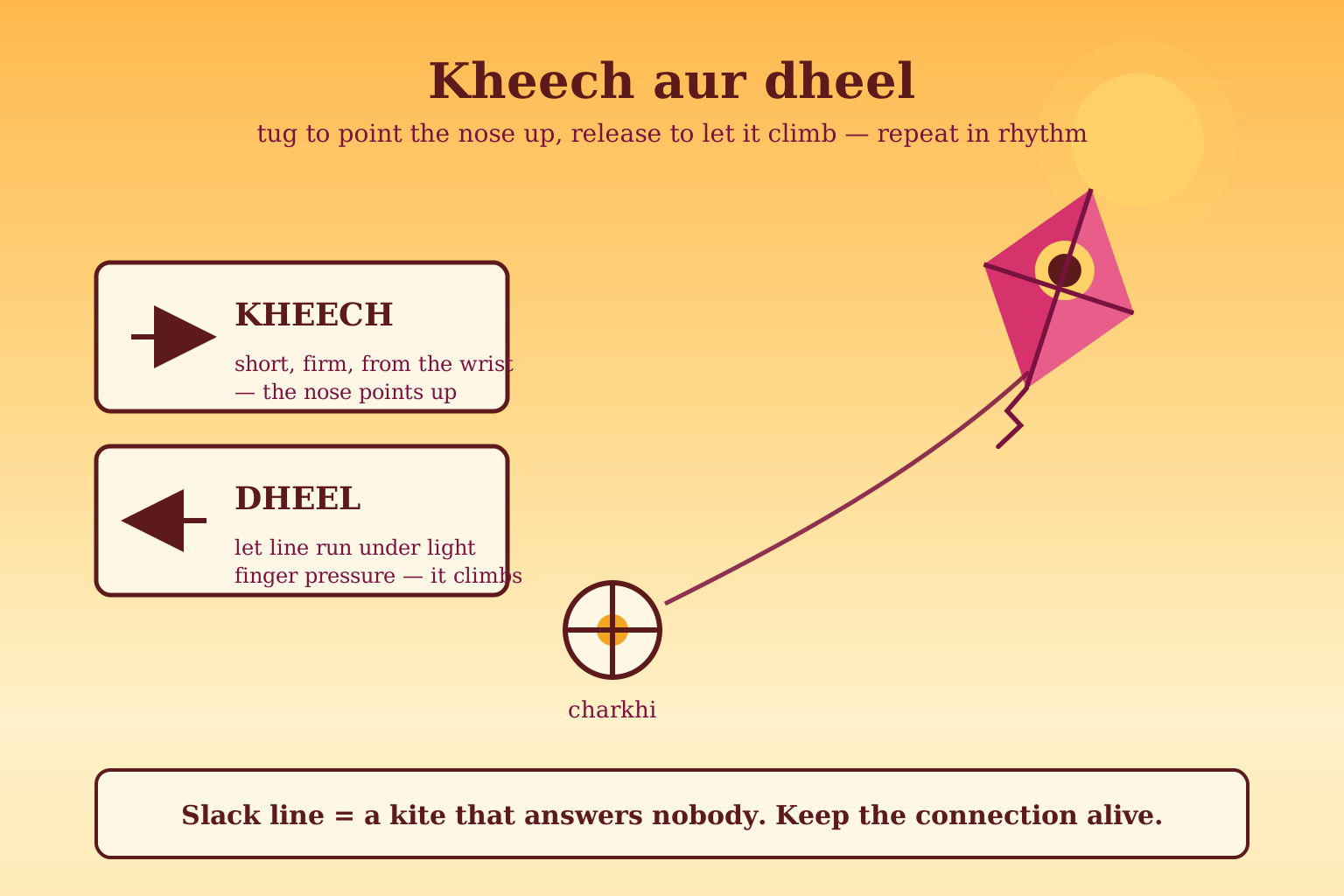
- The core skill: tug to point the nose, release to let it climb, repeat in rhythm
- Tension is the language — a slack line is a kite you no longer command
- Start on a gudda or small patang; big githi frames punish learners
- Adults only on the line, on a rules-compliant roof — that's the law, not our preference
Eighteen banned years produced something unprecedented: a generation of Lahoris who love kites and have never flown one. If that's you — or your hands remember but your confidence doesn't — this is the page. How to fly a patang breaks into a launch, a climb and a hold, each learnable in an afternoon. We'll take them in order, the way the rooftops teach it, with the honest notes a first-timer actually needs.
What do you need before the first launch?
Four things, none negotiable:
- A legal kite matched to your level. Learners want forgiving frames — a 1 tawa gudda or modest patang, not a big githi showpiece. (Why that order works: gudda vs patang.)
- Cotton pinna and something to wind it on. Legal string only — it grips bare hands better than any coated line ever did, and it's the only kind the law allows.
- A compliant rooftop. Walls, space, and the 2027 rules read once by the host.
- An adult on the line. Flying is 18+ under the Ordinance — kids run the chase crew, not the string.
Weather note for planning: you want moving air you can feel on your face — flags stirring, not flags cracking. (The full thresholds are in our wind guide.)
How do you launch a patang?
The rooftop way — two people:
- Read the wind's direction — face it; your kite will fly downwind of you.
- Your partner walks the kite 15–30 feet downwind, holding it lightly by the lower spine, face toward you.
- Take up gentle tension on the line — enough that the kite sits alive in their hands.
- On your signal, they loft it upward — a release into the wind, never a throw at you.
- Immediately tug, short and firm. The nose pitches up, the wind takes the face, and the kite is flying.
If it dives instead: more wind, more tension, or a better-balanced kite — usually in that order. Three failed launches means change something, not repeat harder.
How do you make it climb?
With the rhythm that IS patang flying — pinch-and-release:
- Tug (a sharp, short pull, wrist not shoulder): the kite's nose points up, the wind loads its face, it surges.
- Release (let line run out under light finger pressure): the kite spends that surge climbing away from you.
- Repeat: tug, release, tug, release — each cycle buying height.
Two learner errors cover almost every crash. Releasing slack — line pouring out with no tension — leaves the kite adrift and answering nobody; keep a live connection always. Over-tugging — long hard pulls — swings the kite into loops instead of climbs; short and rhythmic wins. Height itself is your friend: wind above the rooftops is cleaner than the swirl at parapet level, so the first fifty feet are the hardest of the whole day.
How do you hold, steer and land it?
Holding: at your chosen height, keep gentle working tension and let the kite ride. It will wander with the wind's breathing; small tugs re-centre it. A well-set patang holds for an hour on wrist-flicks alone.
Steering: tug while the kite is angled and it moves that way; release and it straightens downwind. That's duel-craft's foundation — though your first festival's goal is flying, not pecha fighting, which deserves its own study.
Landing: wind steadily onto the charkhi, walking the kite down the sky — no yanking, no racing. Last ten feet, your partner receives it. A landed kite flies tomorrow; a crashed one is repair tape and regret.
Etiquette, because March skies are crowded: don't launch into a neighbour's airspace, don't cross lines you aren't duelling, and let cut kites go to the street chasers — that's their festival too.
Frequently asked questions
Can you fly a patang alone?
Experienced flyers ground-launch solo in good wind; beginners shouldn't try. A launch partner costs nothing and prevents the classic first-day frustration spiral.
Why does my patang spin in circles?
Usually over-tugging or an unbalanced kite. Shorten your tugs first; if spinning persists, the kite's bow or tail needs attention — or the wind is gustier than your grade handles.
How high can a patang go?
A full working line puts a kite several hundred yards up — but height is a means (cleaner wind), not the score. Control at any height beats altitude with none.
How long does it take to learn?
One honest afternoon to launch-climb-hold; a festival to feel fluent; a lifetime for the duels — which is the tradition's whole charm.
What kite should I learn on?
A 1 tawa gudda first, then patang. Cheap to lose, forgiving to fly, and everything it teaches transfers upward.
Your first bo kata starts with a tug
Every expert on every rooftop started exactly where you are — one launch, one rhythm, one afternoon. The kites are the easy part: reserve a learner's set now — free, or price-locked — and March's sky will hold a spot for you.
Written by M/S SpeedX Kites, a registered kite seller in Lahore (Reg No. 38731-28012026). If anything here is out of date or wrong, tell us on WhatsApp and we will correct it.
More on buying guides
Kite prices in Lahore: what patang, gudda and dor actually cost
Kite prices in Lahore move daily through Basant season. Gudda ran roughly Rs. 60–200 each at the 2026 festival and cotton pinna Rs. 4,000–12,000 a spool, depending on ply. Here is the reference table, and what we currently charge.
Tawa sizes explained: 1 tawa to 3 tawa, and which one you want
Tawa describes how much paper goes into a kite, running from 1 tawa upward. The bigger the grade, the more wind it needs and the harder it pulls. For an ordinary Lahore rooftop, 1 to 1.5 tawa is the comfortable range.