Lahore Rooftop Rules for Basant 2027: The Checklist an Inspector Would Use on Your Roof
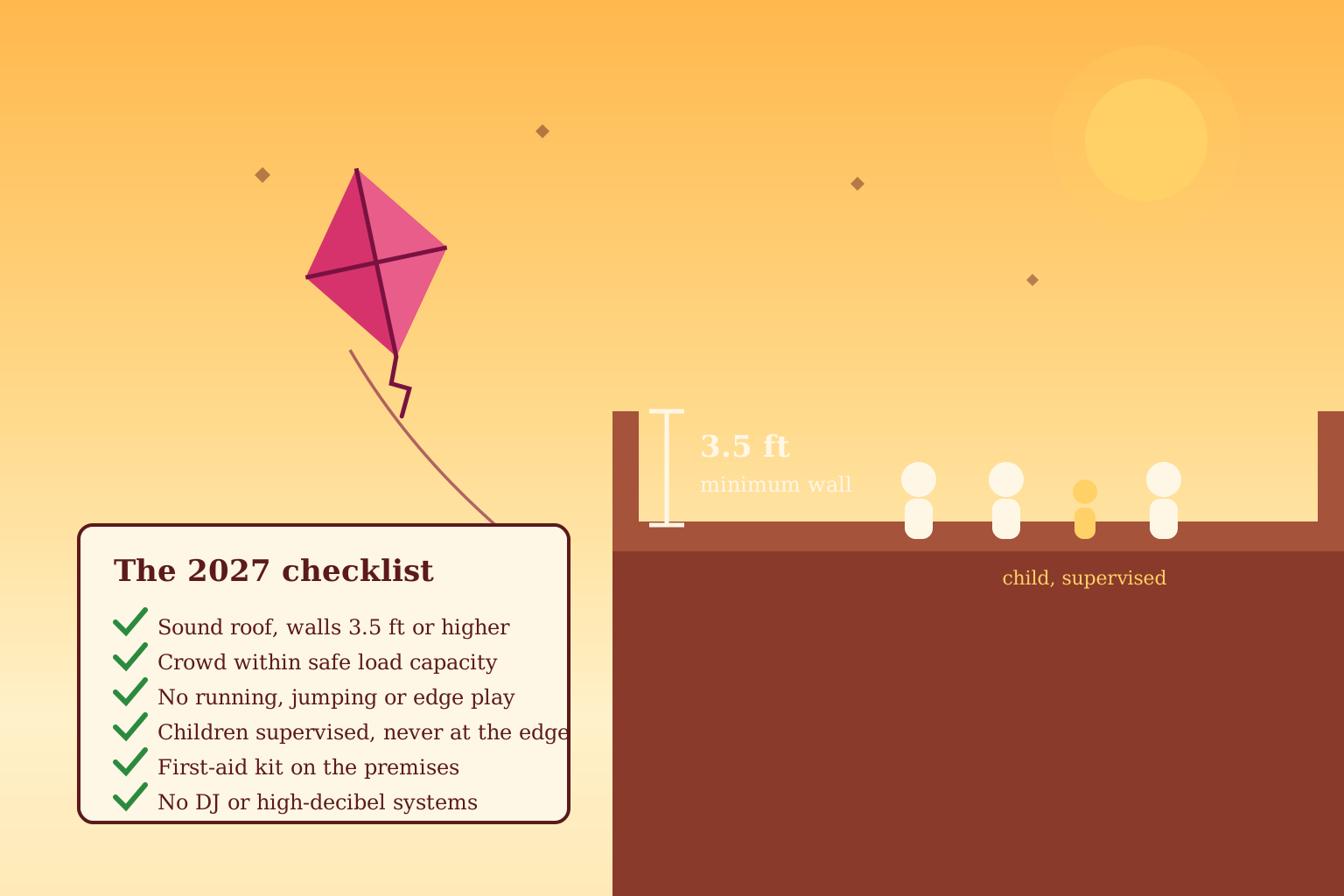
For Basant 2027, kite flying is permitted only on structurally sound rooftops with boundary walls at least 3.5 feet high, crowds within safe load capacity, children continuously supervised and kept from edges, no running or hanging over parapets, no DJ systems, and a first-aid kit on the premises. Building owners and event organisers are jointly liable for violations — and the framework takes effect across Punjab by 30 December 2026, before the season starts.
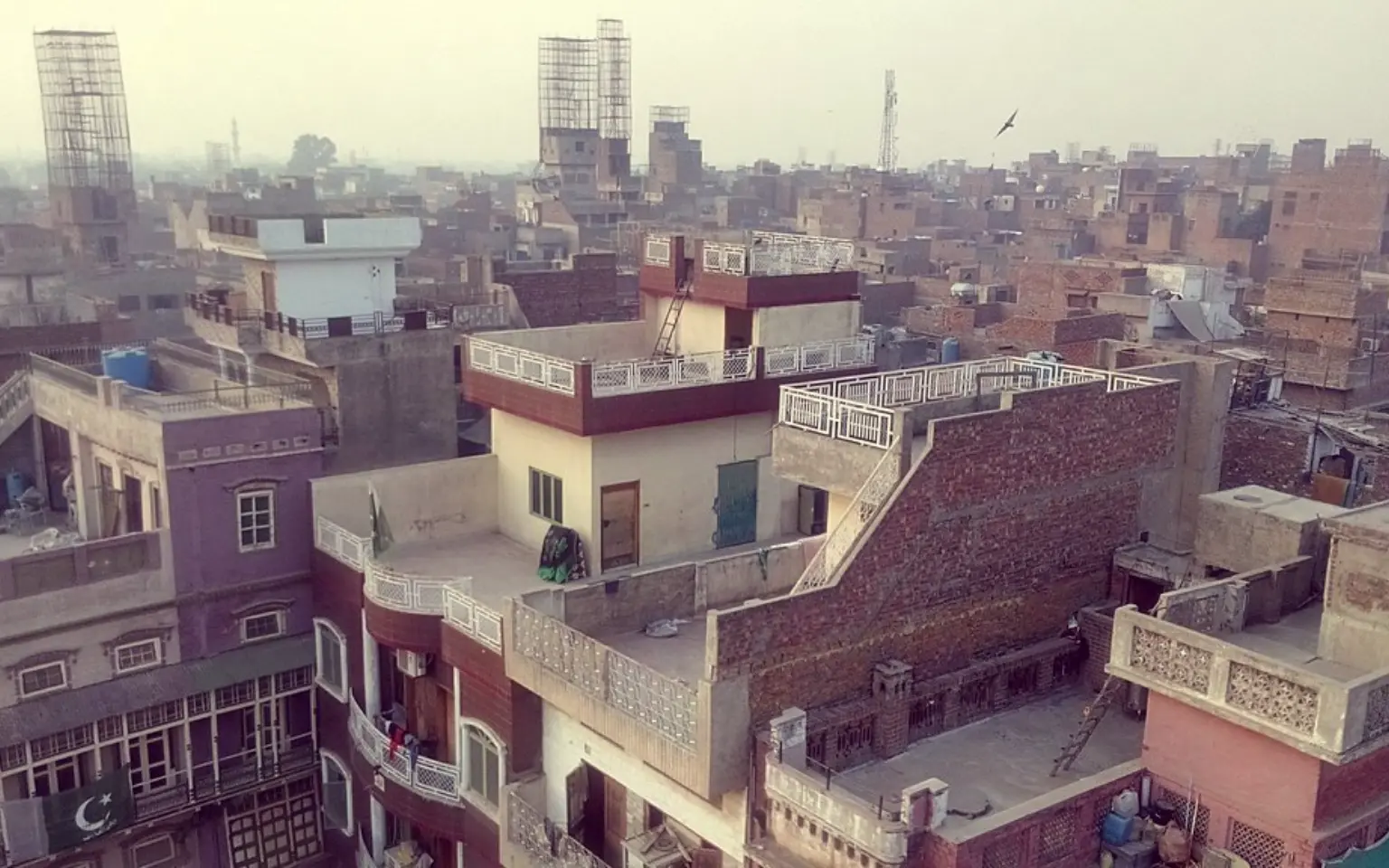
- The wall is the headline rule: 3.5 feet minimum, on a structurally sound roof
- Most of 2026's deaths were rooftop falls — every new rule traces back to that fact
- Hosts carry legal responsibility now: owners and organisers, individually and jointly
- Noise is regulated too: DJs and high-decibel systems are out, with PPC sections behind it
- Rules are in force from 30 December 2026 — fix the roof before the season, not during
The rooftop is where Basant is actually won or lost — not the sky. Lahore's 2026 revival proved the flying could be joyful and the equipment could be clean, and it also showed exactly where the remaining danger lived: twelve of the seventeen reported deaths were falls from roofs. The 2027 rooftop rules answer that directly, and this guide converts them into the checklist a host can walk in ten minutes. We'd rather our customers read it twice than fly once from a roof that fails it.
What does the 3.5-foot wall rule actually require?
Two things, not one: a boundary wall at least three and a half feet high, on a rooftop that is structurally sound. The official framework reported by APP pairs the parapet requirement with load-bearing limits because the two failures compound: low walls make edges lethal, and overloaded roofs make everything lethal.
Measure yours before December. 3.5 feet is roughly waist height on an adult — if your parapet is the decorative half-brick kind common on older additions, the roof doesn't qualify, however many festivals it has hosted before.
How many people can you have on the roof?
As many as the structure safely carries — and no more. The rules bar rooftop crowds beyond safe load capacity and put crowd management on the organiser. For an ordinary family roof, the honest test isn't engineering maths; it's whether you'd host the same crowd for any other purpose without a second thought. Festival excitement is precisely when that judgment slips, which is why the law now names someone accountable for it.
Plan the guest list with the roof, not the biryani, as the constraint.
What are the rules for children on the roof?
Present, supervised, and away from edges. The framework requires continuous adult supervision of children, who may not approach roof edges without an adult — and the flying itself remains 18+ under the Ordinance, so a child's festival role is watching, cheering and chasing cut kites at street level.
The banned behaviours apply to everyone, not just kids: no running, no jumping, no hanging over the edge, no aggressive kite-snatching. Every one of those four describes how a 2026 fall happened.
What about music and noise?
Regulated, with teeth: no DJ systems, no high-decibel sound, and no conduct causing nuisance or harassment to neighbours — violations sitting under sections of the Pakistan Penal Code. The dhol and the day's noise are the festival; the amplifier war between rooftops is what the rule retires.
What must be ready before anyone flies?
- A first-aid kit on the premises — required, not suggested
- Rescue 1122 saved in the host's phone for anything beyond the kit
- The wall measured and the weak parapet sections dealt with
- A named adult watching children as their actual job, not as a vibe
- Legal equipment only — QR-stickered kites, cotton pinna, adult flyers (the full equipment rules sit on our rules page)
And a date in the diary: the framework is enforceable from 30 December 2026. A roof fixed in January is a roof fixed on time; a roof "fixed by the festival" is a bet.
Who is legally responsible if something goes wrong?
The building owner and the event organiser — individually and jointly. That's the sharpest change from 2026, when responsibility was diffuse. If you host, you own the checklist above; if you rent a rooftop out for the festival — as the Walled City's havelis increasingly do — the liability question belongs in the booking conversation, in writing.
Frequently asked questions
What height must a rooftop wall be for Basant 2027?
At least 3.5 feet, on a structurally sound roof. Lower parapets disqualify the roof for festival flying.
Are rooftop parties still allowed at Basant?
Yes — the festival is a rooftop event by definition. What's regulated is the safety envelope: crowd size, conduct, noise, children, first aid.
Can children fly kites if a parent helps?
No — the line stays in adult hands. Children participate everywhere except the string itself.
When do the new rooftop rules start?
They must be implemented across Punjab by 30 December 2026, well before the 12–14 March festival.
Who checks compliance?
The 2026 season ran monitoring through police, drones and control rooms, and the 2027 framework's liability rules give enforcement a named target. Assume visibility, not privacy.
A safe roof is a better party anyway
Every rule above makes the festival more fun, not less — nobody's best Basant memory involves the edge of a parapet. Sort the roof now, then sort the sky: reserve your kites and pinna free or price-locked, delivered when the season's sale opens, with the rules already handled on our side of the counter.
Written by M/S SpeedX Kites, a registered kite seller in Lahore (Reg No. 38731-28012026). If anything here is out of date or wrong, tell us on WhatsApp and we will correct it.
More on rules & safety
Is kite flying legal in Pakistan right now? The province-by-province answer
It depends on the province and the date. In Punjab, kite flying is legal only during the government's announced festival window and under the 2025 Ordinance's conditions — outside that window it remains prohibited, including in Lahore. In Sindh, kite flying, manufacture and sale are banned outright. Status as of late August 2026: no flying window is open anywhere in Pakistan; the next announced window is Basant 2027, 12–14 March in Lahore.
Kite Flying Punishment in Pakistan: The Actual Fines and Jail Terms, Offence by Offence
The heaviest kite-related punishment in Pakistan targets banned string: making, selling or using metallic wire, nylon or chemical/glass-coated manjha carries three to five years' imprisonment, a fine up to Rs. 2 million, or both, under Punjab's 2025 Ordinance. Flying outside the announced window, selling without registration, and rooftop conduct violations are separate offences with their own consequences — and in Sindh, all kite flying is banned outright.