Kite Flying Punishment in Pakistan: The Actual Fines and Jail Terms, Offence by Offence
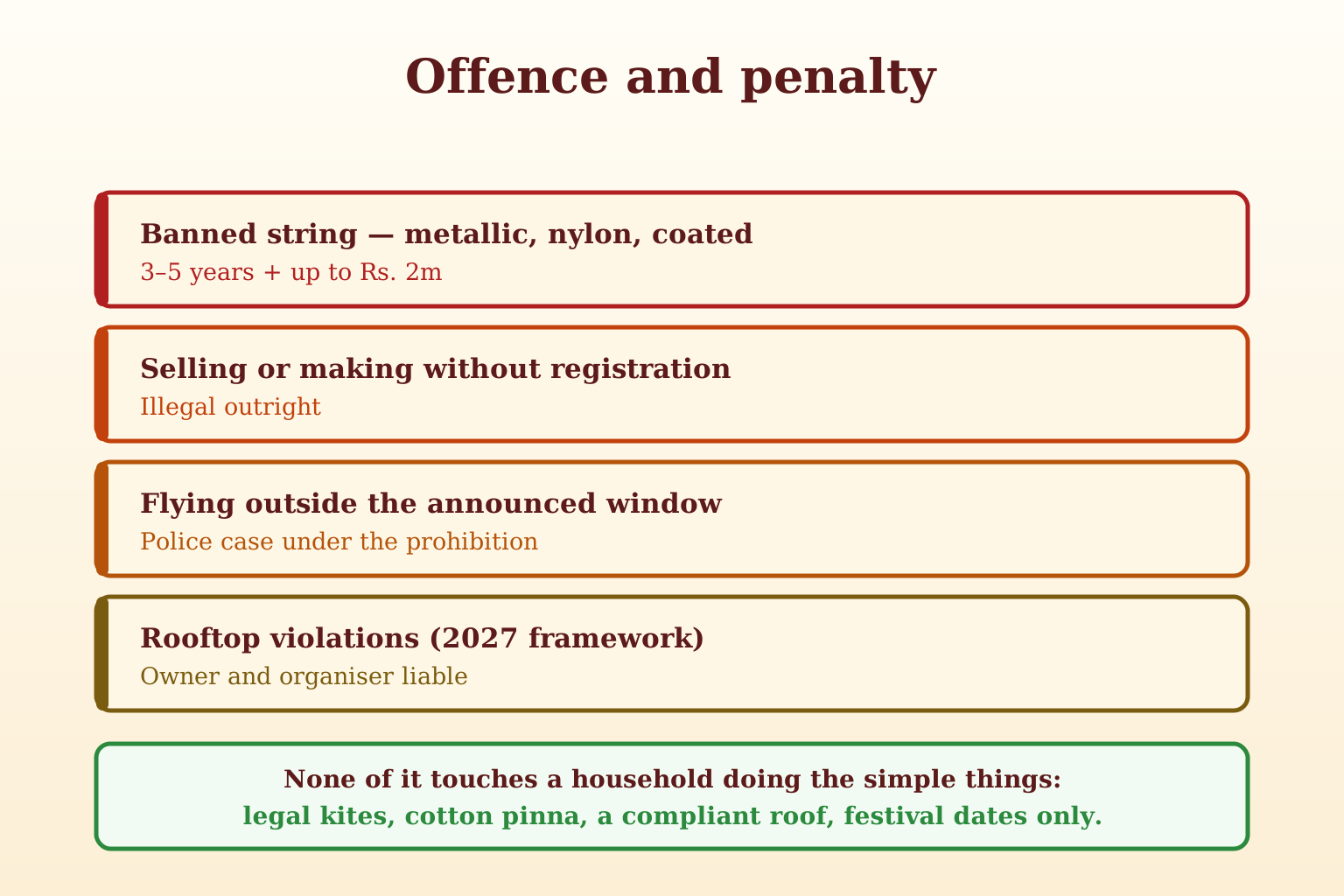
The heaviest kite-related punishment in Pakistan targets banned string: making, selling or using metallic wire, nylon or chemical/glass-coated manjha carries three to five years' imprisonment, a fine up to Rs. 2 million, or both, under Punjab's 2025 Ordinance. Flying outside the announced window, selling without registration, and rooftop conduct violations are separate offences with their own consequences — and in Sindh, all kite flying is banned outright.
- Banned string is the gravest offence: 3–5 years, up to Rs. 2 million, or both — and it's non-bailable
- Unregistered manufacture or sale of kite material is illegal in Punjab
- Flying outside the announced window brings police cases even in Lahore
- The 2027 framework adds owner/organiser liability for rooftop violations, with conduct offences under the Pakistan Penal Code
- 2026's enforcement was real: thousands of cases were registered in past crackdowns, and FIRs were filed even for missing bike safety rods
Patang bazi ki saza — the punishment side of kite flying — is where rumours run wildest, so this guide sticks to what the law and the reporting actually establish. The penalties are not decoration: they were built to kill off the illegal-string trade that took lives and nearly took the festival permanently. Here is what each offence costs, who it applies to, and where buyers and rooftop hosts actually stand. We write it as a registered seller whose business depends on the legal side staying clearly marked.
What is the punishment for banned kite string?
The framework's maximum. Under the Punjab Regulation of Kite Flying Ordinance 2025, violations involving prohibited string — metallic wire, nylon, glass- or chemical-coated manjha — carry three to five years' imprisonment, fines up to Rs. 2 million, or both, and the offence has been reported as non-bailable.
The severity is deliberate. Coated and metallic lines are what cut throats on roads and electrified rooftops — the direct cause of the deaths behind the 2007 ban. The law prices that history in, and it applies across the chain: the maker, the seller and the user of banned string are all exposed.
What happens if you fly outside the festival window?
A police case. Kite flying between windows remains prohibited in Punjab, and enforcement did not retire after the revival — off-season flying in Lahore continues to draw FIRs, and historic crackdowns give a sense of scale: in one pre-revival period, police arrested thousands across Punjab for kite offences.
The window system is the legal heart of the revival: the festival's legitimacy comes from flying being *permitted at defined times*, which requires it to be *prohibited the rest of the time*. Our is-it-legal guide keeps the current status dated.
What are the penalties for sellers and manufacturers?
Operating unregistered is itself unlawful. The 2026 cycle made registration mandatory through the official portal, with certificates displayed at premises — and unregistered sales were declared illegal outright. Selling outside the retail window, selling unstickered stock, or handling banned string each expose a trader separately.
This is why "registered seller" is not a marketing phrase. Our registration (38731-28012026, shown on our licence page) is the difference between a lawful trade and an offence — and why we deliver nothing until each season's sale window opens.
What about rooftop conduct — the 2027 additions?
The new framework converts rooftop safety from advice into liability. Building owners and event organisers are individually and jointly responsible for violations and accidents on their roofs, and conduct offences — noise, harassment, nuisance — are prosecutable under named sections of the Pakistan Penal Code.
For a family host, the practical reading: the 3.5-foot wall, the crowd limit, the first-aid kit and the no-edge-play rules are now *your* legal checklist, not just good sense. We keep the full set in plain language on the rules page.
Even the roads carry kite-season penalties
2026's most talked-about enforcement wasn't about kites at all: motorcycles without the mandatory front safety rod were stopped citywide, and FIRs were registered against riders without one during the festival crackdown. The rod deflects stray string away from a rider's neck — protection the state made compulsory rather than optional.
Frequently asked questions
What is patang bazi ki saza in Pakistan?
For banned string: three to five years and up to Rs. 2 million. For off-window flying: a police case under the prohibition. For rooftop violations under the 2027 framework: owner and organiser liability, with conduct offences under the PPC.
Is kite flying a non-bailable offence?
The serious string offences have been reported as non-bailable under the Ordinance. Ordinary participation in the legal festival window, with legal equipment, is not an offence at all.
Can a buyer be punished for a kite with no QR sticker?
Unverifiable stock can be confiscated, and using banned string is an offence regardless of who sold it. The safe pattern is unchanged: registered seller, scannable sticker, cotton pinna.
What's the punishment for kite flying in Karachi?
Sindh bans kite flying, manufacture and sale entirely, so any of it is an offence there — there's no festival window to be inside.
Did anyone actually get charged in 2026?
Yes — from string cases to bike-rod FIRs, the 2026 season ran with drones, cameras and control rooms watching, and cases followed. Enforcement is a design feature of the revival, not a bluff.
Stay a mile inside the line
None of these penalties touch a household that does the simple things: legal kites, cotton pinna, a compliant roof, festival dates only. That's the entire recipe — and it's precisely the stock we hold. Reserve it now, free or price-locked, and fly in March with nothing to explain to anyone.
Written by M/S SpeedX Kites, a registered kite seller in Lahore (Reg No. 38731-28012026). If anything here is out of date or wrong, tell us on WhatsApp and we will correct it.
More on rules & safety
Is kite flying legal in Pakistan right now? The province-by-province answer
It depends on the province and the date. In Punjab, kite flying is legal only during the government's announced festival window and under the 2025 Ordinance's conditions — outside that window it remains prohibited, including in Lahore. In Sindh, kite flying, manufacture and sale are banned outright. Status as of late August 2026: no flying window is open anywhere in Pakistan; the next announced window is Basant 2027, 12–14 March in Lahore.
Lahore Rooftop Rules for Basant 2027: The Checklist an Inspector Would Use on Your Roof
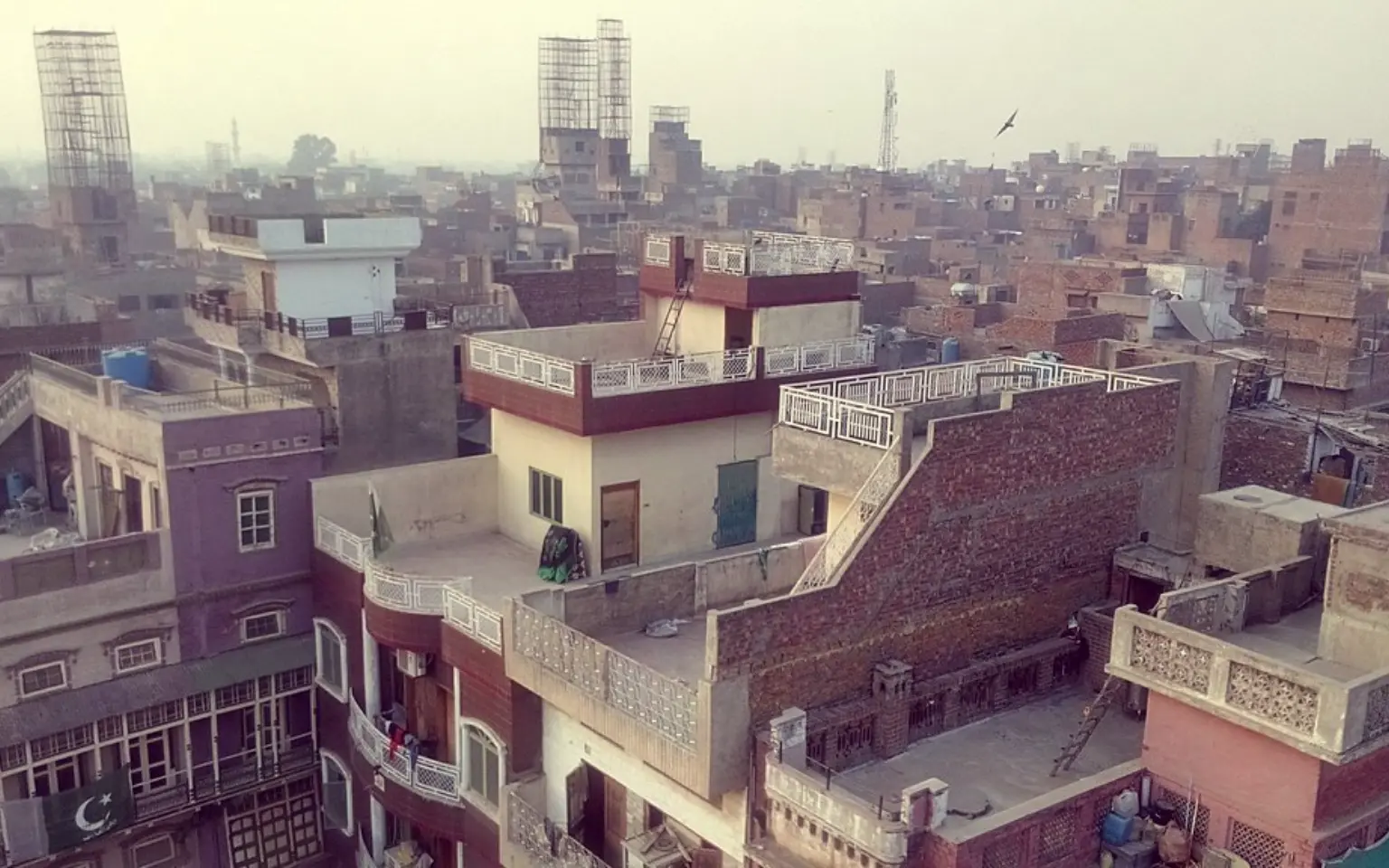
For Basant 2027, kite flying is permitted only on structurally sound rooftops with boundary walls at least 3.5 feet high, crowds within safe load capacity, children continuously supervised and kept from edges, no running or hanging over parapets, no DJ systems, and a first-aid kit on the premises. Building owners and event organisers are jointly liable for violations — and the framework takes effect across Punjab by 30 December 2026, before the season starts.