Gudda vs patang: what is the difference, and which do you buy?
Patang is the standard kite most rooftops fly. Gudda is the larger class — more surface, more pull, more wind needed. Both are legal, both are size-capped, and most rooftops end up owning some of each.
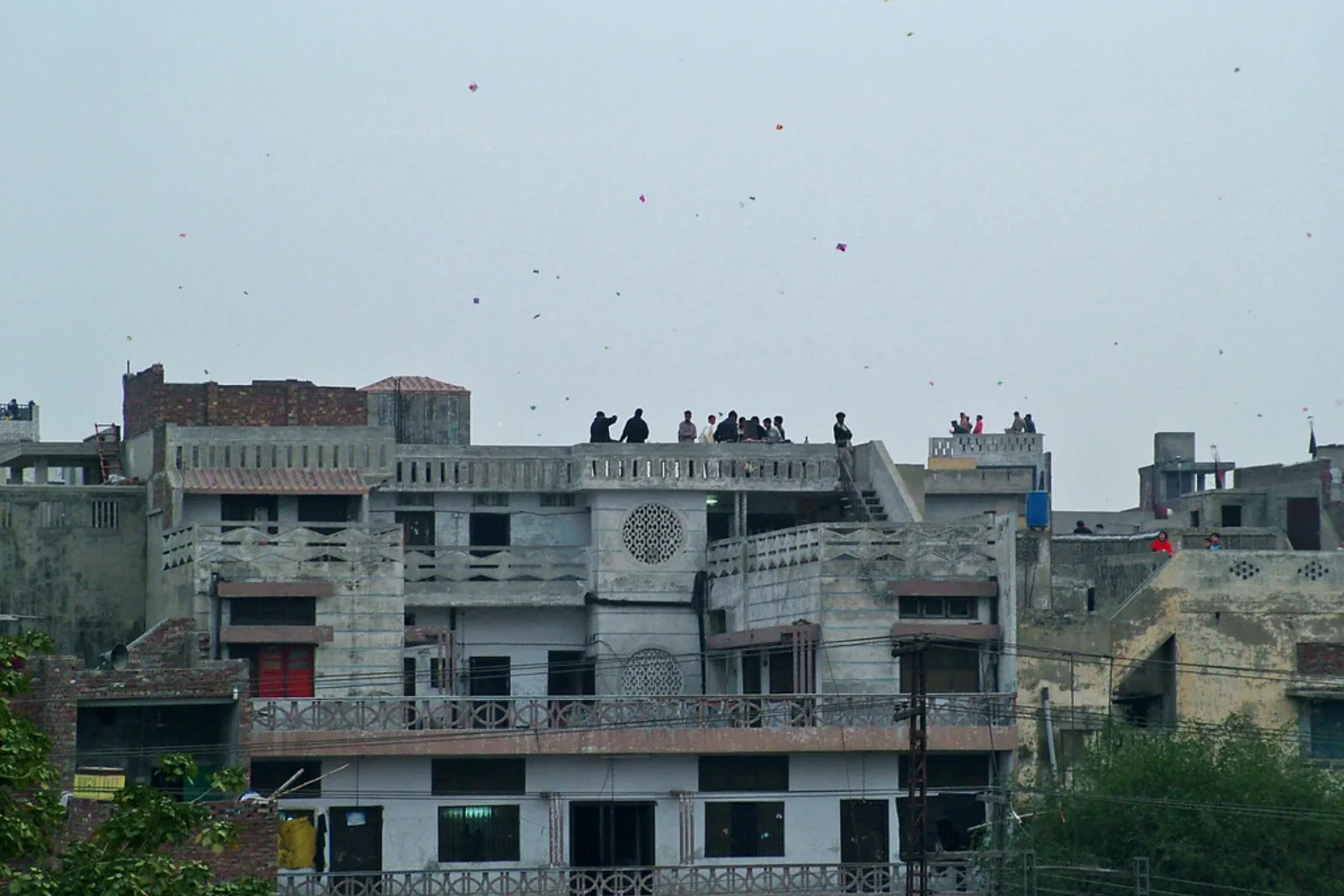
What is the difference between gudda and patang?
Size and pull. A patang is capped at 35 inches wide by 30 long and is the everyday flying kite. A gudda is capped at 40 by 34, carries more surface area, and pulls noticeably harder — which makes it the choice when the wind is up.
| Patang | Gudda | |
|---|---|---|
| Legal size cap | 35″ × 30″ | 40″ × 34″ |
| Pull | Moderate | Strong |
| Wind needed | Light to moderate | Moderate to strong |
| Typical line | 9–12 ply cotton | 12–18 ply cotton |
| Best for | Learning, most rooftops | Open roofs, stronger wind |
Which should I buy first?
Patang. It is more forgiving while you learn what the line is telling you, it flies in the lighter wind most rooftops actually get, and it costs less to lose. Add a gudda once you know your roof and the wind picks up.
A mixed dozen of patang is the standard first order for a reason. You will lose some — everybody does, especially in a first season back — and you will learn quickly which colours you can actually still see against a bright sky at distance. That last point sounds trivial until you have watched a pale kite disappear at height.
Can I fly a gudda on the same string as a patang?
Not comfortably. A gudda under load will test lighter line and can part it, which loses both the kite and a length of string over somebody else's roof. Pair gudda with 12 to 18 ply cotton and a charkhi rated to carry a full spool of it.
Buy gloves at the same time. This is the point in the conversation where people nod and skip it, and it is the reason the first hour of a real gudda day ends with somebody wrapping a hand in a handkerchief.
Written by M/S SpeedX Kites, a registered kite seller in Lahore (Reg No. 38731-28012026). If anything here is out of date or wrong, tell us on WhatsApp and we will correct it.
More on buying guides
Kite prices in Lahore: what patang, gudda and dor actually cost
Kite prices in Lahore move daily through Basant season. Gudda ran roughly Rs. 60–200 each at the 2026 festival and cotton pinna Rs. 4,000–12,000 a spool, depending on ply. Here is the reference table, and what we currently charge.
Tawa sizes explained: 1 tawa to 3 tawa, and which one you want
Tawa describes how much paper goes into a kite, running from 1 tawa upward. The bigger the grade, the more wind it needs and the harder it pulls. For an ordinary Lahore rooftop, 1 to 1.5 tawa is the comfortable range.