Night Kite Flying at Basant: White Kites, Floodlights, and What the Rules Now Allow
Night flying is Basant's oldest signature — the festival traditionally opens with white kites flown after dark, chosen because white stays visible against the night sky, from floodlit rooftops around the Walled City. The tradition returned with the 2026 revival and continues under the current rules: same legal equipment and adult-only lines as daytime, with the 2027 framework's noise limits (no DJs or high-decibel systems) and rooftop safety rules applying at full force after dark.
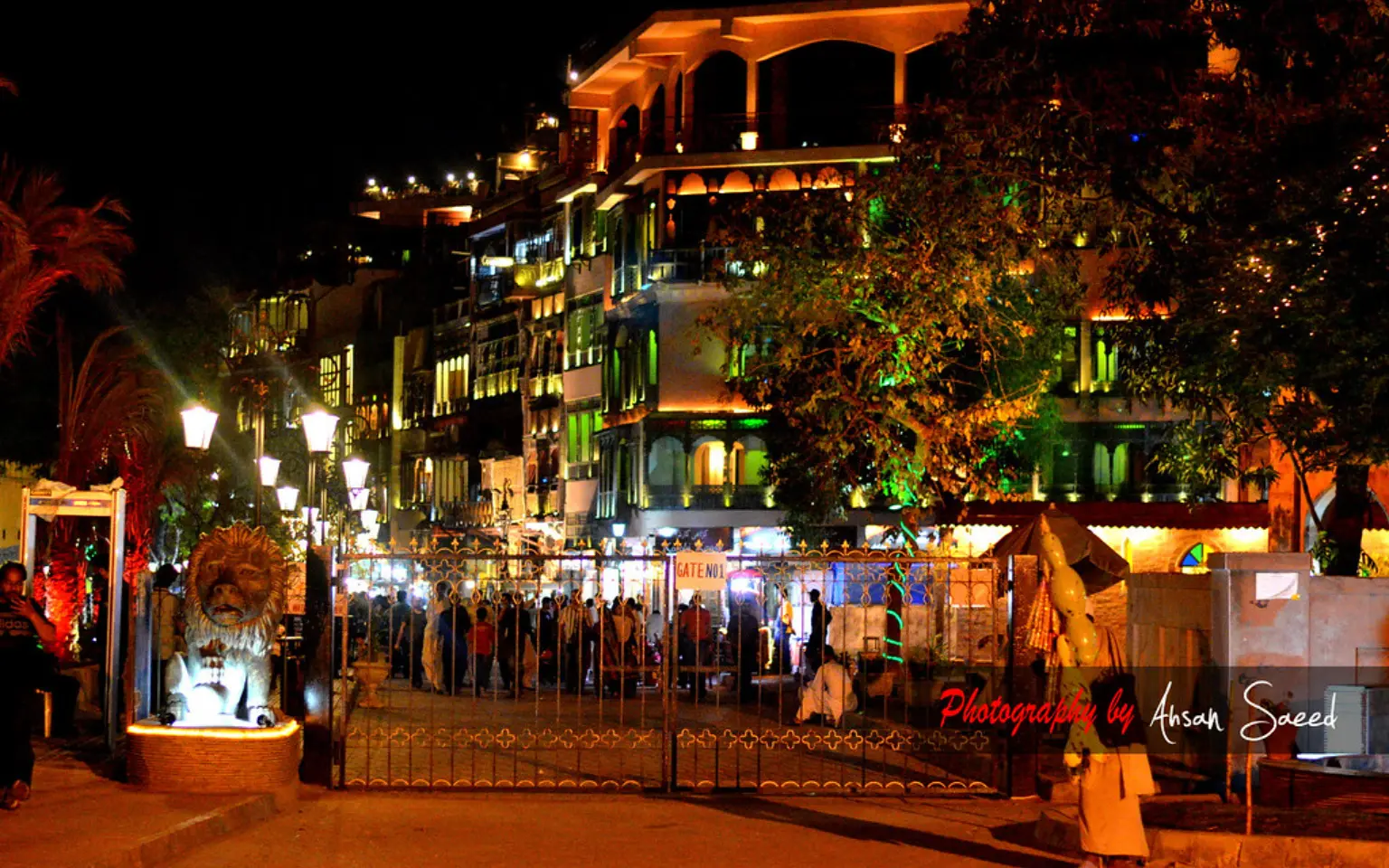
- The festival's opening night belongs to white kites — visibility, not decoration, chose the colour
- The historic stage: floodlit rooftops in the old quarter around Badshahi Mosque and the Fort
- 2026 venues ran night programming too — Safari Park's festival events stretched past midnight
- Night rules = day rules + more caution: lighting, edges, and the DJ ban matter most after dark
- Calmer night air favours lighter kites and steadier flying than the afternoon duels
Ask anyone who saw Basant before the ban what they miss most, and the answer is usually the nights: a sky you can't see holding kites you can, drum lines answering each other across dark rooftops, floodlights turning the old city into a stage. Night kite flying isn't a novelty add-on — it's the festival's opening act by tradition — and it survived the eighteen-year silence intact. Here's the tradition, the technique, and the rules that keep the after-dark hours as safe as they are unforgettable.
Why white kites at night?
Physics dressed as poetry. Against a dark sky, a white kite catches every particle of city glow and floodlight, staying trackable at heights where any coloured kite vanishes — so the tradition standardised on white for the night sessions. The classic pattern, documented in accounts of the festival, has nighttime flying in the old quarter around the Badshahi Mosque and Lahore Fort opening the festival itself: floodlights up at sunset, white kites first.
The 2026 revival kept the script — night celebrations rolling through the city, rooftop parties running day-and-night menus, and organised venues like Safari Park programming festival activities past midnight.
How is night flying different from daytime?
Three practical shifts:
The air calms. Thermal stirring dies with the sun, leaving smoother, lighter flow — night favours the lighter kites and rewards steady holding over aggressive duelling. (Where each grade's wind floor sits: the wind guide.)
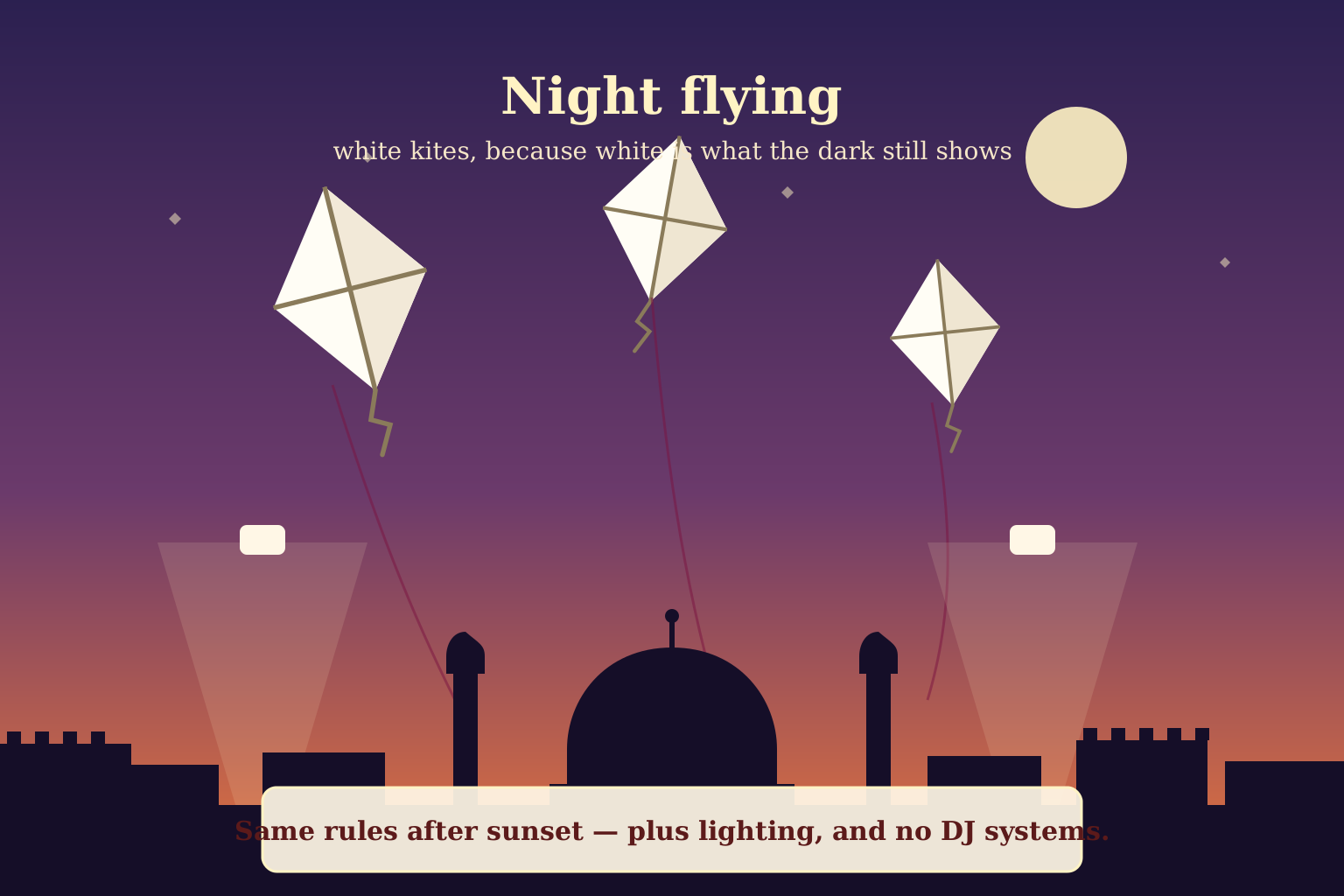
Your line disappears. You'll fly by feel — tension through the fingers — far more than by sight, which is genuinely good training. Duels still happen, but the classic night session is possession flying: long, high, serene.
The rooftop changes character. Food and dhol move to the centre, children tire into spectators, and the flying becomes the evening's slow heartbeat rather than its competition.
What do the rules say about flying after dark?
Everything that applies by day applies by night, and three rules bite harder after sunset:
- Lighting and edges. The 2027 rooftop framework — 3.5-foot walls, no edge play, supervised children — was written for exactly the conditions darkness creates. Light your rooftop properly; the rules' logic doubles at night.
- Noise. The DJ and high-decibel ban lands hardest on night parties, with conduct offences sitting under Pakistan Penal Code sections. Dhol and celebration are the festival; the amplifier war is what's retired.
- Equipment. No change: QR-verified kites, cotton pinna, adults on lines. Night makes illegal string MORE dangerous — an invisible coated line at road height is the ban era's darkest image — so the cotton-only rule is at its most non-negotiable after dark.
How do you set up a night session properly?
- Stock white kites deliberately — a few in the pile transforms your night options. (Design visibility logic also favours our Fancy's bold prints in twilight.)
- Light the working area, not the sky — you need to see hands, line and parapet; the kite finds the city's glow.
- Fly lighter grades than the afternoon's — calmer air, and fatigue is real by hour ten.
- Warm layers — even a 30°C March day drops hard after dark (Lahore's March lows run around 14°C).
- Wind down before exhaustion does — most rooftop accidents cluster where tiredness meets darkness meets edges.
Frequently asked questions
Is night kite flying legal at Basant?
Yes — within the festival window, under the same rules as daytime, on compliant rooftops. The 2026 revival's nights ran openly and monitored, and nothing in the 2027 framework changes that.
Why are night kites white?
Visibility — white catches floodlight and city glow against the dark sky. Tradition made the practical choice ceremonial.
Can you duel at night?
You can, by feel — experienced flyers prize night pechas precisely for the difficulty. Most rooftops keep nights for steady flying and save the cutting for daylight.
What's the best kite for night flying?
A light, familiar kite in white — the 1 tawa gudda in a white or pale print is the classic night workhorse.
Do the zones apply at night?
Zone rules run for the festival's duration, day and night, and 2026's monitoring — drones, cameras, control rooms — didn't sleep either.
Save some sky for after sunset
Plan the nights on purpose: white kites in the reservation, the roof lit and legal, the dhol ready. Build the order now — free reservation or locked price — and when March's first floodlights come on, your rooftop opens the festival the way Lahore always has.
Written by M/S SpeedX Kites, a registered kite seller in Lahore (Reg No. 38731-28012026). If anything here is out of date or wrong, tell us on WhatsApp and we will correct it.
More on lahore kite culture
Basant Dress: Why the Whole City Wears Yellow, and What People Actually Wear on the Roof
Yellow is Basant's colour because the festival celebrates spring, when Punjab's mustard fields turn the countryside gold — wearing basanti (yellow) mirrors the season itself. On the rooftops that translates to yellow shalwar kameez and dupattas, often with fresh flowers, worn with practical shoes for a day spent flying, feeding and chasing kites.
Lahore's Kite Markets: Mochi Gate and Where the Trade Actually Lives
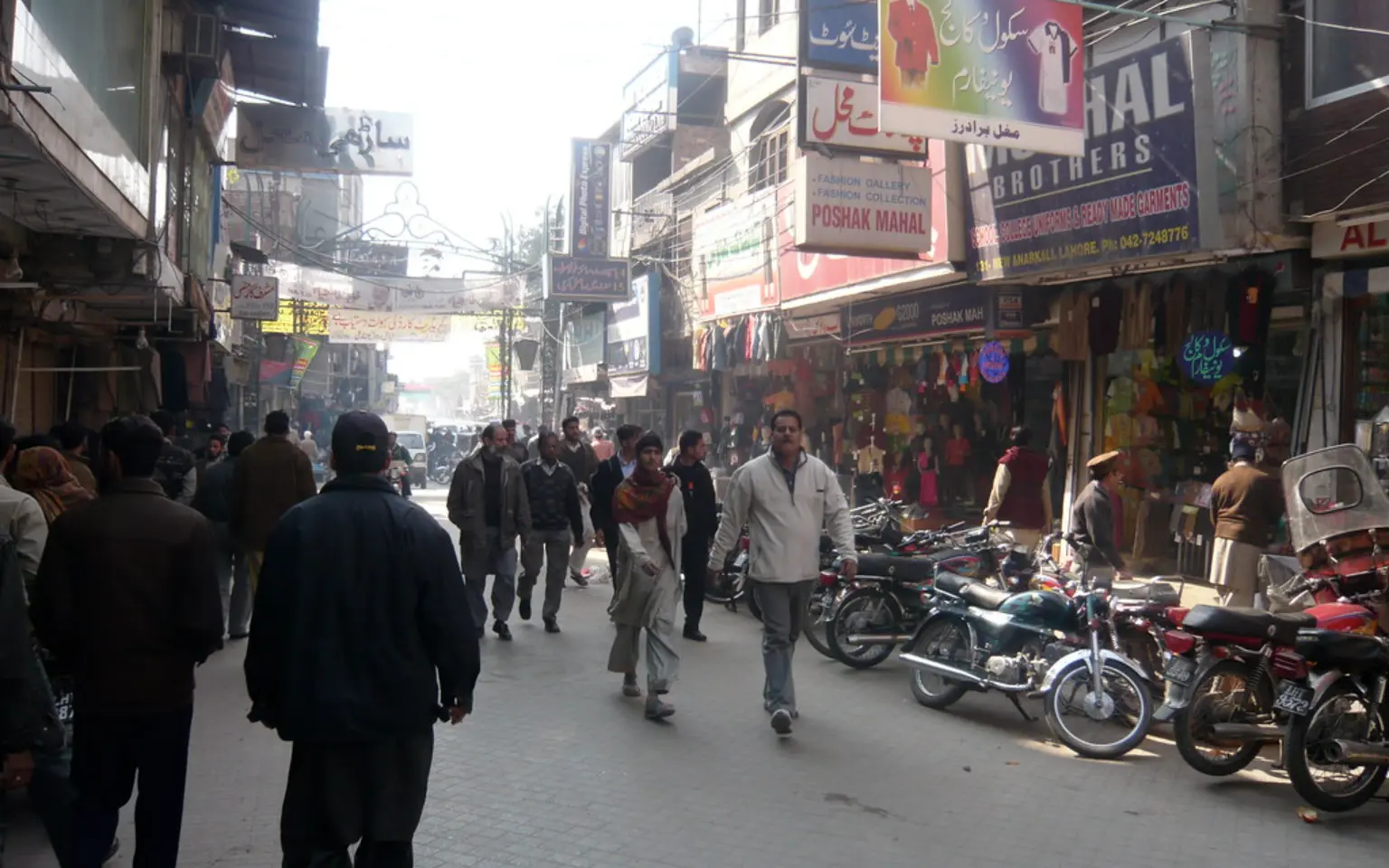
Lahore's kite trade lives in the Walled City, with the lanes inside Mochi Gate its most storied address — narrow streets of kite makers and string sellers working a craft generations old. The market is seasonal by law now: stalls fill when a festival's production and sale windows open and thin out after. Off-season, the legitimate trade runs on registrations and reservations rather than open shelves.