Basant Weather: What February Gave the Kites, and What March Will
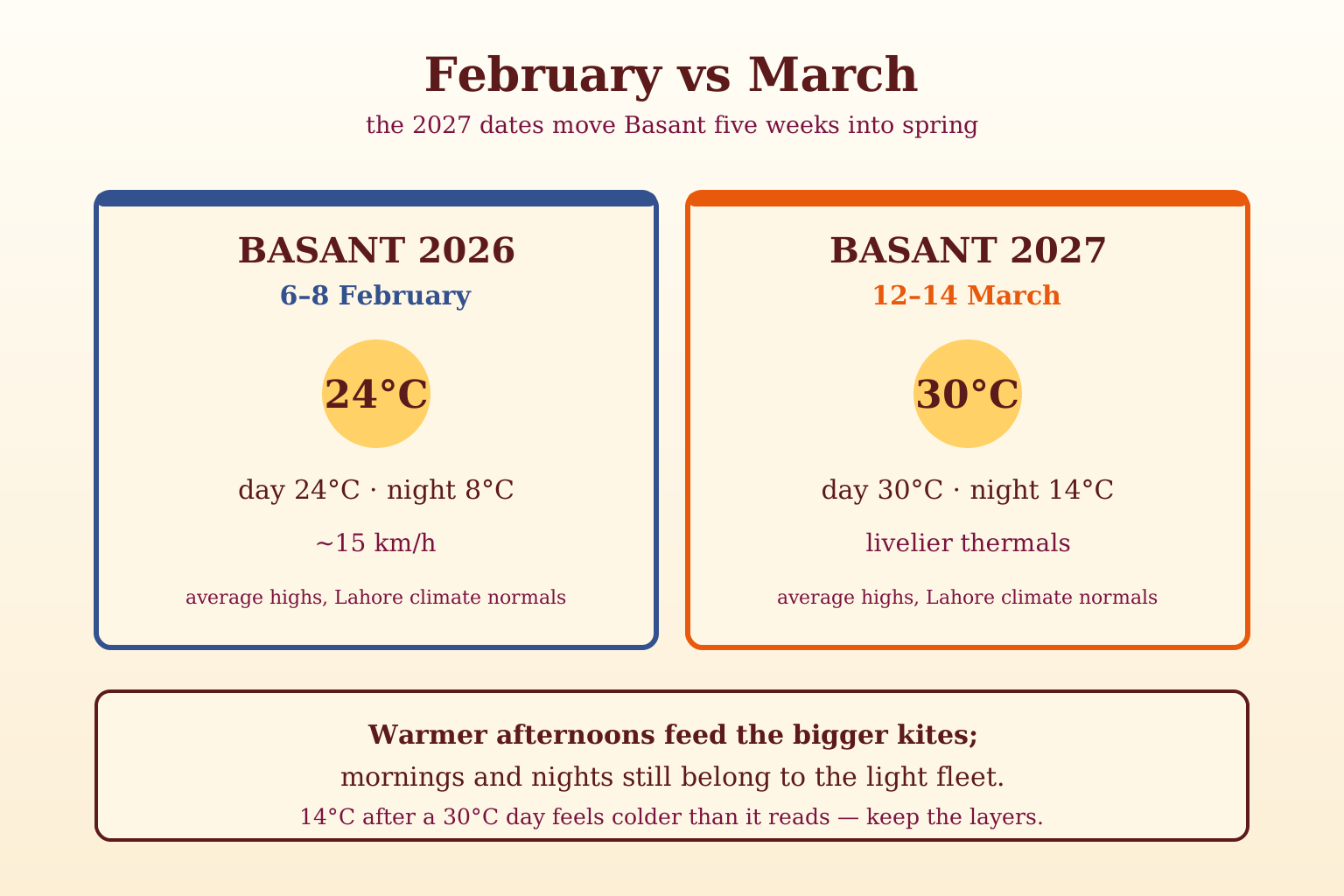
Moving Basant from early February to 12–14 March shifts the festival into genuinely different weather: Lahore's February averages highs near 24°C with cool 8°C nights, while March runs highs around 30°C with 14°C nights and livelier afternoon thermals. For flying, that means stronger daytime lift favouring bigger kites; for hosting, warmer days, gentler nights, and hydration mattering more than blankets.
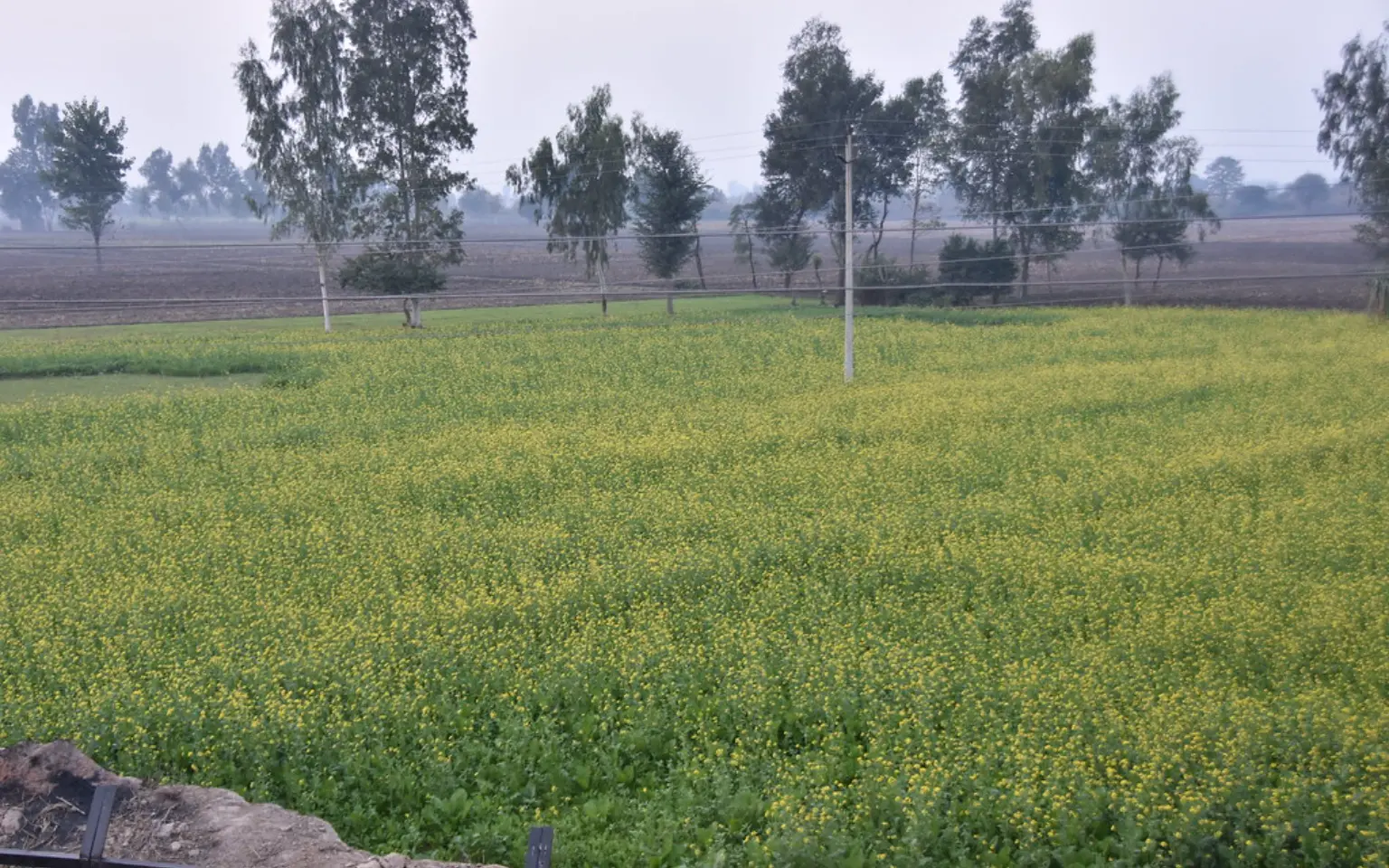
- February festival weather (2026): ~24°C days, ~8°C nights, winds averaging ~15 km/h
- March festival weather (2027 dates): ~30°C days, ~14°C nights, warm-afternoon thermals
- Flying implication: March afternoons feed the 1.5 tawa and big patang better than February's did
- Hosting implication: sun and hydration replace cold as the main comfort planning
- Night sessions stay cool either month — layers remain non-negotiable after dark
Basant weather used to be a fixed question with a February answer. The 2027 dates change that: five extra weeks of spring between the 2026 revival and the next festival, and a genuinely different sky to plan for. This is the comparison done with actual climate numbers — what each month gives flyers, hosts and kites — so your March planning starts from data rather than February memories. It pairs with our wind-thresholds guide; this page is the season, that one is the speeds.
What was the weather like for Basant 2026?
Classic Lahore February: average highs around 24°C, lows near 8°C, and monthly winds averaging roughly 15 km/h — crisp mornings, pleasant flying afternoons, and nights cold enough that the rooftop parties wrapped in shawls around the food. Good festival weather by any standard, with the one caveat February always carries: the cool, stable air means daytime thermal lift stays modest, and light-wind spells favour the smaller kites.
The 6–8 February festival flew well in exactly that pattern — comfortable days, white-kite nights that genuinely required the warm layers.
What will 12–14 March weather look like?
Statistically: spring proper. Lahore's March climate runs average highs near 30°C with lows around 14°C — six degrees warmer at both ends of the day than the 2026 festival. Longer evenings too, with sunset drifting later toward the equinox: more usable sky per festival day.
The flying-relevant difference is what warmth does to air. Warmer ground breeds afternoon thermals — rising, stirring air that adds working energy to the sky even on days the gradient wind reads similar. March afternoons in Lahore are, on average, livelier flying than February's.
What does the shift mean for your kite fleet?
A modest but real rebalancing:
- The bigger kites gain. Thermal-fed afternoons are exactly what a 1.5 tawa and a 4.5 githi patang want — expect more hours per day when the heavy end of the fleet is the right choice.
- The light fleet keeps its mornings and nights. Early and late, the air still calms; the 1 tawa remains the bookend kite.
- Gust discipline matters slightly more. Thermal air is livelier air — the tension-control habits that prevent line cuts and lost pechas earn their keep in March.
Net: the mixed-fleet advice doesn't change, but its weighting shifts a notch toward the muscle end — worth reflecting in what you reserve.
What does it mean for hosting?
The comfort problem inverts. February hosting fought cold; March hosting manages sun:
- Shade and water become the infrastructure — a 30°C rooftop afternoon with shouting and stairs runs through hydration fast (the food page's waves-and-water math applies double).
- Sun protection joins the checklist — caps and sunscreen for the up-gazers.
- Nights still need layers — 14°C after a 30°C day feels colder than it reads; the shawls stay in the plan.
- The safety framework doesn't sweat either way — walls, kits and the rooftop rules are weather-independent.
Frequently asked questions
Is March better than February for kite flying?
For daytime flying, on averages, yes — warmer afternoons mean livelier air and more hours for the bigger kites. February's edge was cooler comfort; March trades it for flying energy.
Will Basant 2027 be hot?
Warm rather than hot: ~30°C average highs. Plan sun and water for afternoons, layers for nights, and it's close to ideal festival weather.
Does it rain during Basant season in Lahore?
Both months sit in Lahore's drier season; rain days happen but don't define either month. Watch the actual forecast in festival week rather than the climate table.
What time of day is best to fly in March?
Late morning through the thermal afternoon for the big kites; the calm bookends for light kites and night sessions.
Should the weather change what I pre-book?
At the margin: a notch more weight on the 1.5 tawa and patang end than a February festival would justify. The mixed fleet stays the answer; March adjusts the mix.
Plan for the March sky you'll actually get
Five extra weeks of spring is a gift to the festival — warmer roofs, livelier air, longer evenings. Meet it with the right fleet: reserve March's mix now, free or price-locked, and let the weather page be the reason your heavy kites finally get their afternoons.
Written by M/S SpeedX Kites, a registered kite seller in Lahore (Reg No. 38731-28012026). If anything here is out of date or wrong, tell us on WhatsApp and we will correct it.
More on basant
Basant 2026 in numbers: Rs 1.5 billion, three days, seventeen deaths
Basant 2026 ran 6–8 February, the first legal festival since 2007. The Kite Flying Association put the trade surge at Rs 1.5 billion. Seventeen people died and more than a hundred accidents were recorded. Both figures matter for 2027.
How to register for Basant 2027: licences, forms and the portal, explained
Ordinary kite flyers do not need a personal licence — registration is for kite manufacturers, sellers and kite-flying clubs, and it runs through the e-Biz app and basant.punjab.gov.pk. Registration for Basant 2027 has not opened yet: the dates (12–14 March 2027) are announced, but the government has not yet started the 2027 registration cycle. This page tracks it.