1 Tawa or 1.5 Tawa Gudda: Which One Should Your Rooftop Pre-Book?
Book the 1 tawa gudda (Rs. 300 today) if this is your first season back, your rooftop is enclosed, or your wind arrives soft and swirling — it forgives everything a returning flyer does. Book the 1.5 tawa (Rs. 450) if you flew last season and your roof catches clean wind — the extra paper climbs harder and holds duels steadier. Most rooftops book both: 1 tawa as the fleet, 1.5 as the sharp end.
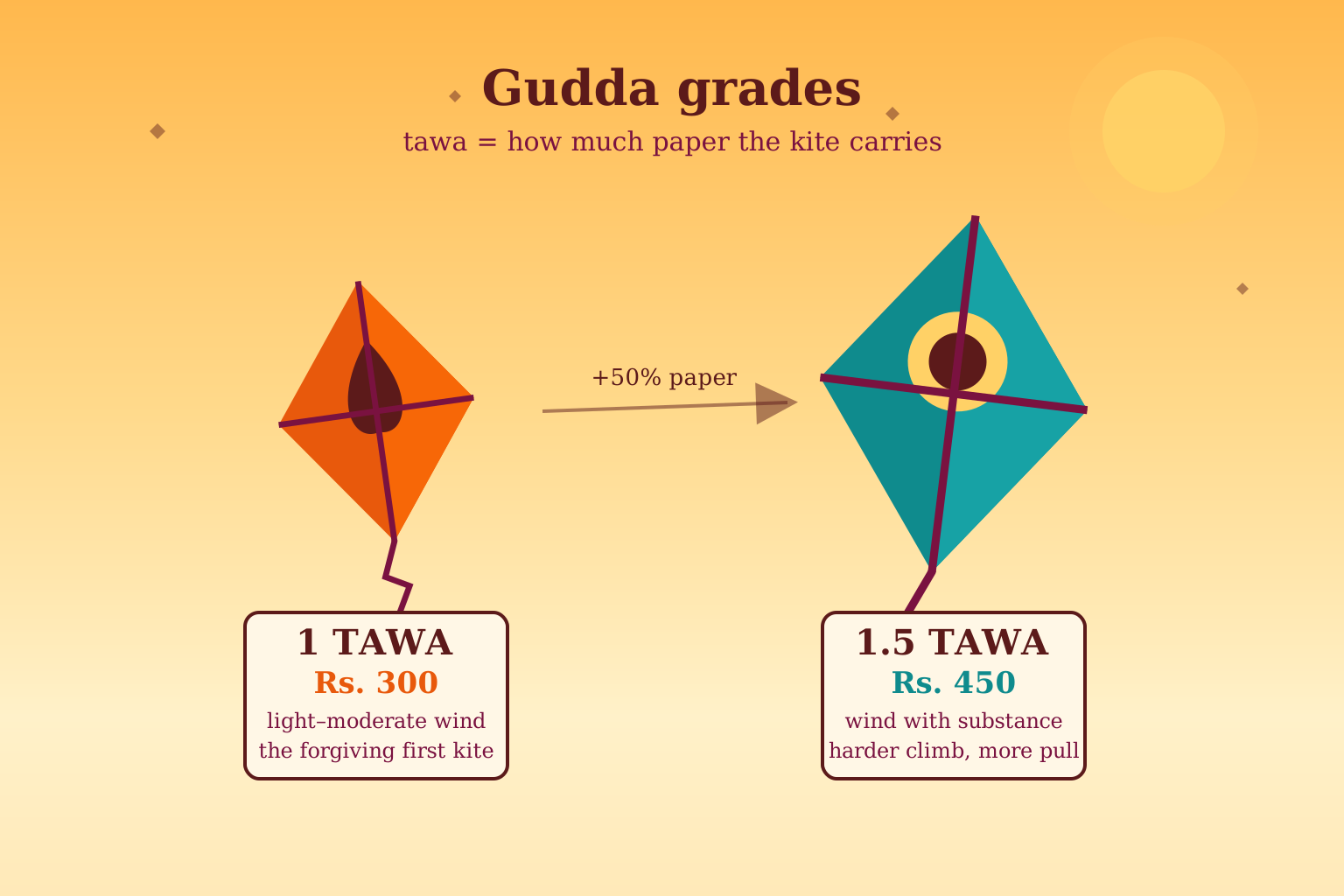
- The decision is wind + roof + hands, in that order — price is the tiebreak, not the driver
- 1 tawa: forgiving, flies in ordinary conditions, the honest first kite
- 1.5 tawa: noticeably more pull; rewards experience and open wind, punishes slack line
- Rs. 150 per kite separates them today (Rs. 1,800 per dozen)
- The Fancy option is a 1.5 decision with visibility added — same flight, printed identity
Two kites, one grade apart, and every rooftop asks the same question at booking time. The good news: this decision has a right answer for your specific roof, and it takes three questions to find. Here's the decision page — conditions, costs and the mixed-fleet pattern most groups land on — written from the SpeedX Kites counter, where we hear how last season's choices actually flew.
What's actually different between the grades?
Paper — and everything paper causes. Tawa grades measure the paper quantity in the kite (the full grading ladder is here), and the half-tawa step between these two changes the kite's character:
- Climb: the 1.5 rises harder and sits higher in the same wind
- Pull: noticeably stronger — the grade where gloves stop being optional advice
- Stability: more authority in gusts and duels; less tolerance of a slack line
- Wind floor: the 1.5 needs wind with substance; the 1 tawa flies on less
Neither is "better" — they're tuned for different days. Which is the whole decision.
The three questions that decide it
1. What's your wind? An open roofline catching clean flow feeds a 1.5; a courtyard roof with swirling, interrupted air is 1 tawa country. (March's warmer, livelier afternoons — Lahore averages around 30°C highs that month — favour the bigger kite slightly more than February did.)
2. What's your roof? Enclosed and walled-in argues small; upper-storey and exposed argues either. This overlaps with the 2027 rooftop rules anyway — the compliant roof and the flyable roof are usually the same roof.
3. Whose hands? First season back since the ban: 1 tawa, no debate — relearning line feel on a forgiving kite is the fast path. Flew 2026: the 1.5 is the upgrade your hands are asking for.
Three answers pointing the same way = your grade. Split answers = the mixed fleet below.
What does each choice cost?
Today's rates (28 August 2026), single and dozen:
The Rs. 150 gap matters at fleet scale — a dozen's difference is Rs. 1,800 — but let conditions decide and price confirm: the wrong-grade dozen is the expensive one, whatever it cost. Rates move with the season; the 50% lock freezes today's numbers if you'd rather book the decision and forget the market.
The answer most rooftops actually book
A mixed fleet, weighted by the group:
- The fleet: a dozen 1 tawa — spares, learners, soft-wind hours, the kites everyone can fly
- The sharp end: a few 1.5s for the confident hands and the afternoon wind
- The identity layer: a Fancy or two — the same 1.5 flight wearing taj-and-card-suit prints you can spot at full line when duels tangle the sky
That mix covers every hour of a festival day, which is exactly what a rooftop is trying to buy.
Frequently asked questions
Is 1.5 tawa harder to fly than 1 tawa?
Harder isn't quite it — more demanding. It asks for real wind and attentive line work, and repays both; the 1 tawa asks for less and forgives more.
Can a beginner start on 1.5 tawa?
They'll fly it on a good-wind day and struggle on the rest. Starting on 1 tawa costs nothing but Rs. 150 of pride and saves a season of frustration.
Which grade wins duels?
Hands win duels. Between equal flyers, the 1.5's stability helps — but a skilled line on a 1 tawa beats a slack line on anything.
Do both grades use the same string?
Yes — every 9-ply cotton pinna we sell flies both. Heavier hands often pair the 1.5 with a premium name for consistency, but that's preference, not requirement.
Can I change my mix after pre-booking?
Until dispatch, yes — a reservation holds your count, and WhatsApp adjusts it. That flexibility is half the point of booking early.
Decide once, fly all March
Answer the three questions, pick your mix, and reserve it in two messages — free, or locked at today's table. The grade debate is winter's; the sky is March's.
Written by M/S SpeedX Kites, a registered kite seller in Lahore (Reg No. 38731-28012026). If anything here is out of date or wrong, tell us on WhatsApp and we will correct it.
More on buying guides
Kite prices in Lahore: what patang, gudda and dor actually cost
Kite prices in Lahore move daily through Basant season. Gudda ran roughly Rs. 60–200 each at the 2026 festival and cotton pinna Rs. 4,000–12,000 a spool, depending on ply. Here is the reference table, and what we currently charge.
Tawa sizes explained: 1 tawa to 3 tawa, and which one you want
Tawa describes how much paper goes into a kite, running from 1 tawa upward. The bigger the grade, the more wind it needs and the harder it pulls. For an ordinary Lahore rooftop, 1 to 1.5 tawa is the comfortable range.