What Is Basant? Lahore's Kite Festival, Explained for Your First Time Up on the Roof
Basant is Lahore's spring festival, celebrated by flying kites from rooftops across the city — days of aerial duels, yellow clothes, drums and food, ending in night flying under floodlights. Banned for nearly two decades over illegal-string deaths, it returned legally in February 2026 under strict rules and is next scheduled for 12–14 March 2027.
- Basant marks the arrival of spring; the kite is its language and the rooftop its venue
- An entire generation of Lahoris never saw it legally — the 2007 ban lasted until the 2026 revival
- "Bo kata!" is the cry when you cut a rival's kite line mid-air
- The revived festival is regulated: QR-verified kites, cotton string only, adults on the lines
- Basant 2027 is announced for 12–14 March in Lahore
If you grew up outside Lahore — or grew up in it after 2007 — Basant may be something you've only heard described at family dinners. What is Basant festival actually like, and what should a first-timer expect now that it's legal again? This guide covers the day itself, the vocabulary, the food, the rules that came with the revival, and how to be ready for it — assembled by our team at SpeedX Kites in Lahore, who spend the whole season inside the festival's supply line.
What happens at Basant?
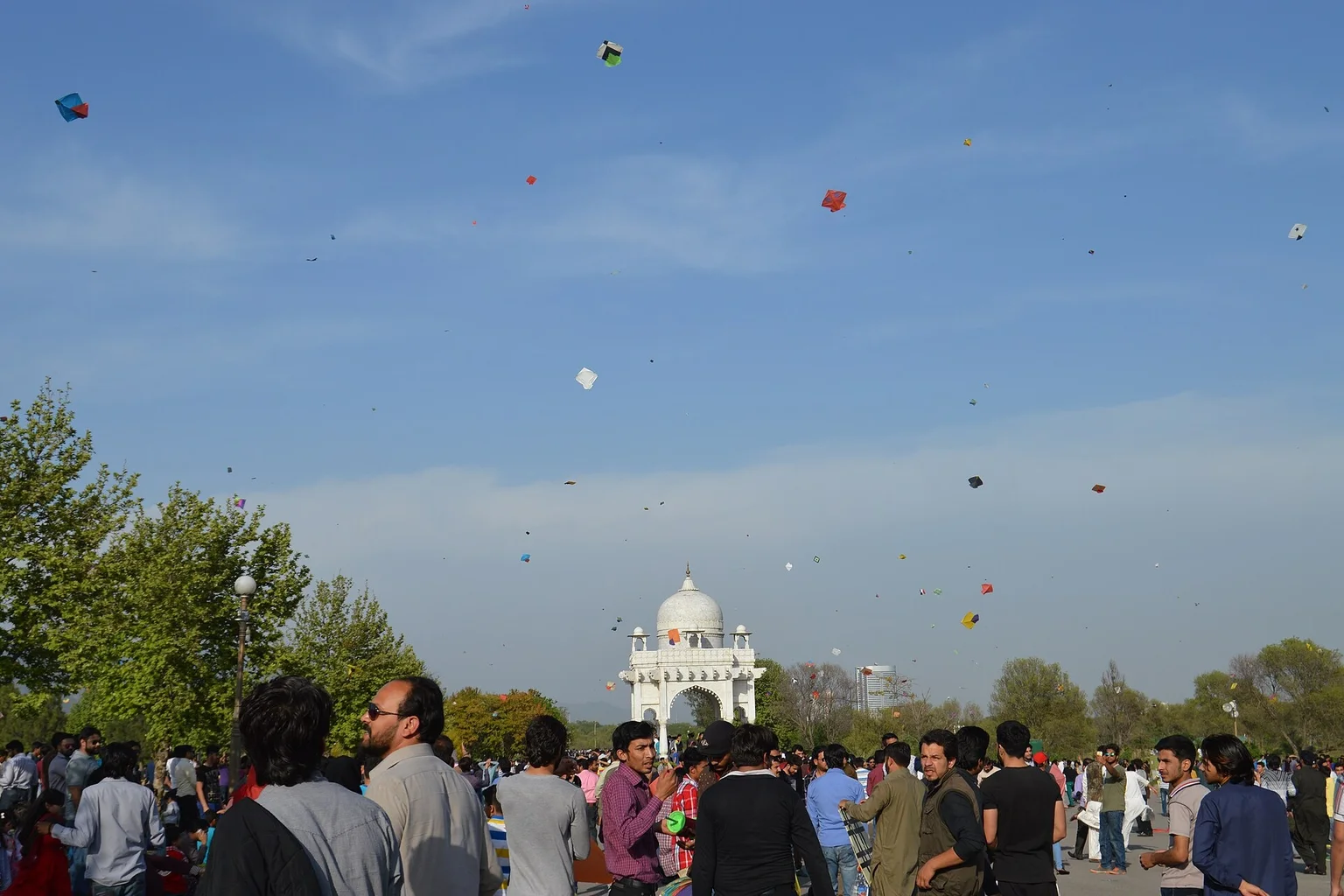
For two or three days, the city moves upward. Families claim their rooftops from early morning; kites go up by the hundreds until the sky over any neighbourhood is a moving field of paper diamonds. The point is not just flying — it's the duel. Flyers cross lines with neighbouring rooftops and try to cut each other's kites loose, and every severed line sends a cheer across the block.
Around the flying, the festival runs on food, drums and colour. Rooftop menus in 2026 ran from barbecue and mutton tikka to hareesa and ladoos, with havelis in the Walled City booked out for day-and-night parties. After sunset the festival doesn't stop — floodlights come on and white kites go up, chosen because they stay visible against the night sky.
Why kites, and why yellow?
Basant is a spring festival at its root — the name refers to the season, and the yellow that floods the city mirrors the mustard fields blooming across Punjab in the same weeks. Kites became the festival's expression centuries ago and never left it: the sky is the one stage every household shares, and a kite is the cheapest ticket onto it.
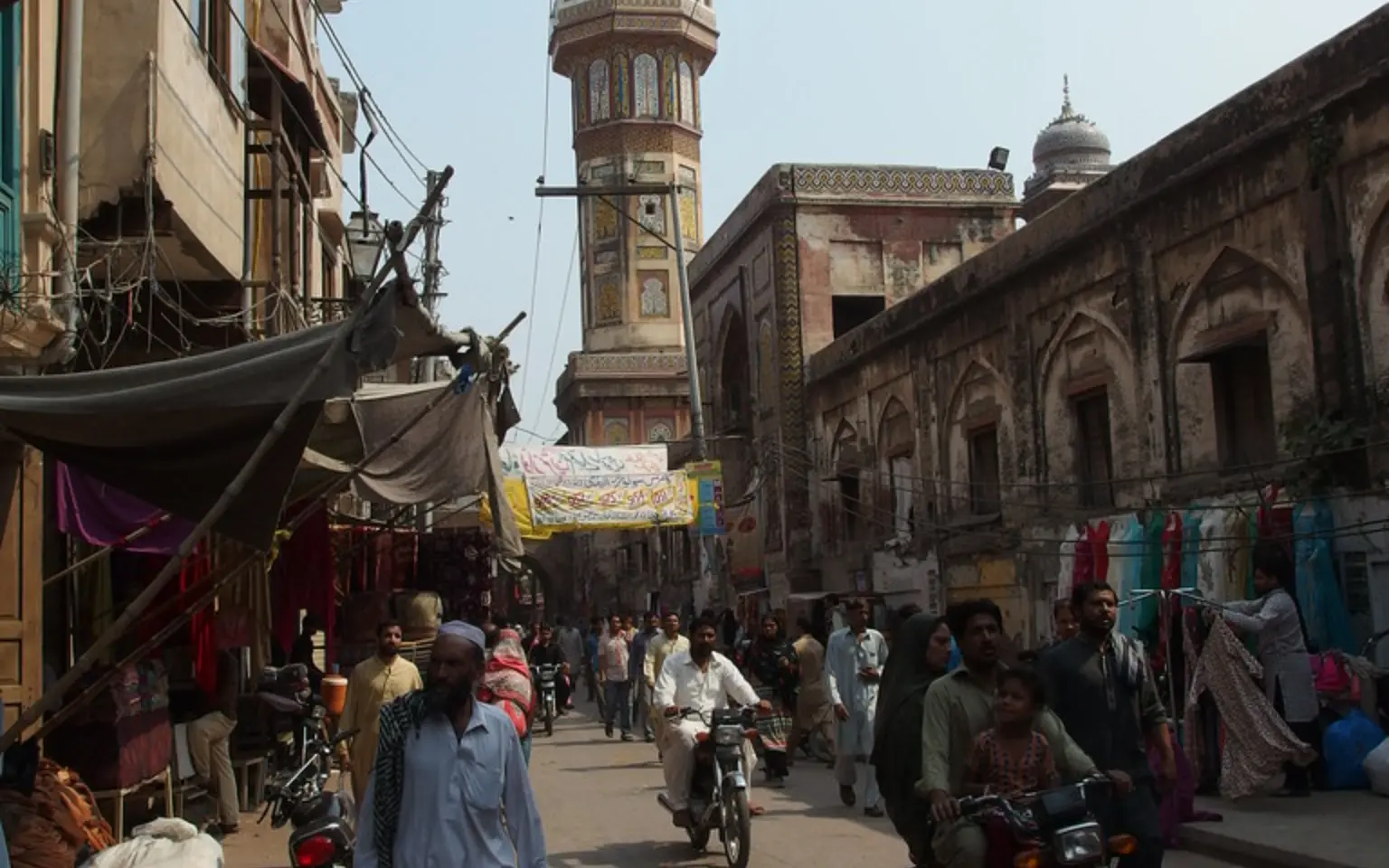
That's also why the festival belongs so completely to Lahore. The old city's dense, flat-roofed neighbourhoods — the thirteen-gate Walled City above all — form a continuous rooftop landscape where thousands of flyers can duel across streets. Cities built differently never developed the same rooftop culture.
What does "bo kata" mean?
It's the victory cry — roughly "it's been cut!" — shouted the instant your line severs a rival's. The sound of the revived festival was, in the Tribune's words, a city erupting with bo-kata from every direction at once.
The cut is the festival's core skill. Two lines cross, both flyers work their kites to saw against the other's string, and the loser's kite drifts loose for neighbourhood kids to chase. Winning takes line control, kite choice and nerve — which is why the vocabulary of kites and string runs so deep here.
Why was Basant banned, and how did it come back?
The honest part of the story: the festival's own equipment killed people. Illegal strings — glass-coated, chemically treated, later metallic — turned stray lines into blades, and after years of deaths, kite-flying regulations arrived in 2005 and a full provincial ban took effect in 2007.
The comeback took a law. The Punjab Regulation of Kite Flying Ordinance 2025 rebuilt the festival on traceability: licensed manufacturers in four approved districts, registered sellers, a QR sticker on every legal kite, plain cotton string only, and flying restricted to adults during an announced window. Lahore flew legally on 6–8 February 2026 for the first time in eighteen years, and kite makers whose trade had nearly vanished called it their livelihood returning.
We are one thread of that system — a registered Lahore seller — and we'd rather explain the rules than pretend they're red tape. The rules are the festival's survival terms; 2026 proved both that the city still loves Basant and that the discipline matters.
What do you need for your first Basant?
- A compliant rooftop — boundary walls, sensible crowd numbers, and the current rooftop rules read once by whoever hosts.
- Legal kites — QR-stickered gudda or patang; a first-timer wants the forgiving sizes, which we walk through in our gudda vs patang guide.
- Cotton pinna — the only legal string, sold in wound balls; plan roughly two 1,000-yard pieces per casual flyer.
- An adult on every line — under-18s watch and chase cut kites; the law puts the string itself in adult hands.
- Food, and more of it than you think — the rooftop runs on it.
Stock is the one item that punishes lateness: 2026's sale window was one week, and the city cleared it out. Pre-booking is how Lahore households now get ahead of that.
Frequently asked questions
When is the next Basant?
12–14 March 2027 in Lahore, announced by the Punjab Chief Minister. Sale permits for kite-flying material had not been issued as of late August 2026.
Is Basant a religious festival?
It's a seasonal and cultural festival — the celebration of spring's arrival — observed across communities in Punjab for centuries.
Can tourists or visitors join Basant?
Yes, and 2026 drew visitors from across Pakistan and abroad. You'll need a rooftop invitation or an organised event, and the same rules apply: adult flyers, legal equipment.
Is kite flying at Basant dangerous?
The festival's dangers came from illegal string and reckless rooftops, which is what the current rules target — cotton-only line, wall requirements, adult flyers. Follow them and the day is what it was always meant to be.
What should I wear to Basant?
Yellow, if you want to be traditional — the festival's colour. Practically: something you can move in, because a rooftop day is an active one.
Get your first rooftop right
The best first Basant is a prepared one: rules read, roof sorted, kites and string reserved before the city empties the shops. Reserve yours free — or fix today's price with half down — and it's delivered as soon as sale opens. Start with the catalogue, and ask us anything on WhatsApp; first-timers are half our conversations.
Written by M/S SpeedX Kites, a registered kite seller in Lahore (Reg No. 38731-28012026). If anything here is out of date or wrong, tell us on WhatsApp and we will correct it.
More on basant
Basant 2026 in numbers: Rs 1.5 billion, three days, seventeen deaths
Basant 2026 ran 6–8 February, the first legal festival since 2007. The Kite Flying Association put the trade surge at Rs 1.5 billion. Seventeen people died and more than a hundred accidents were recorded. Both figures matter for 2027.
How to register for Basant 2027: licences, forms and the portal, explained
Ordinary kite flyers do not need a personal licence — registration is for kite manufacturers, sellers and kite-flying clubs, and it runs through the e-Biz app and basant.punjab.gov.pk. Registration for Basant 2027 has not opened yet: the dates (12–14 March 2027) are announced, but the government has not yet started the 2027 registration cycle. This page tracks it.